
Introduction
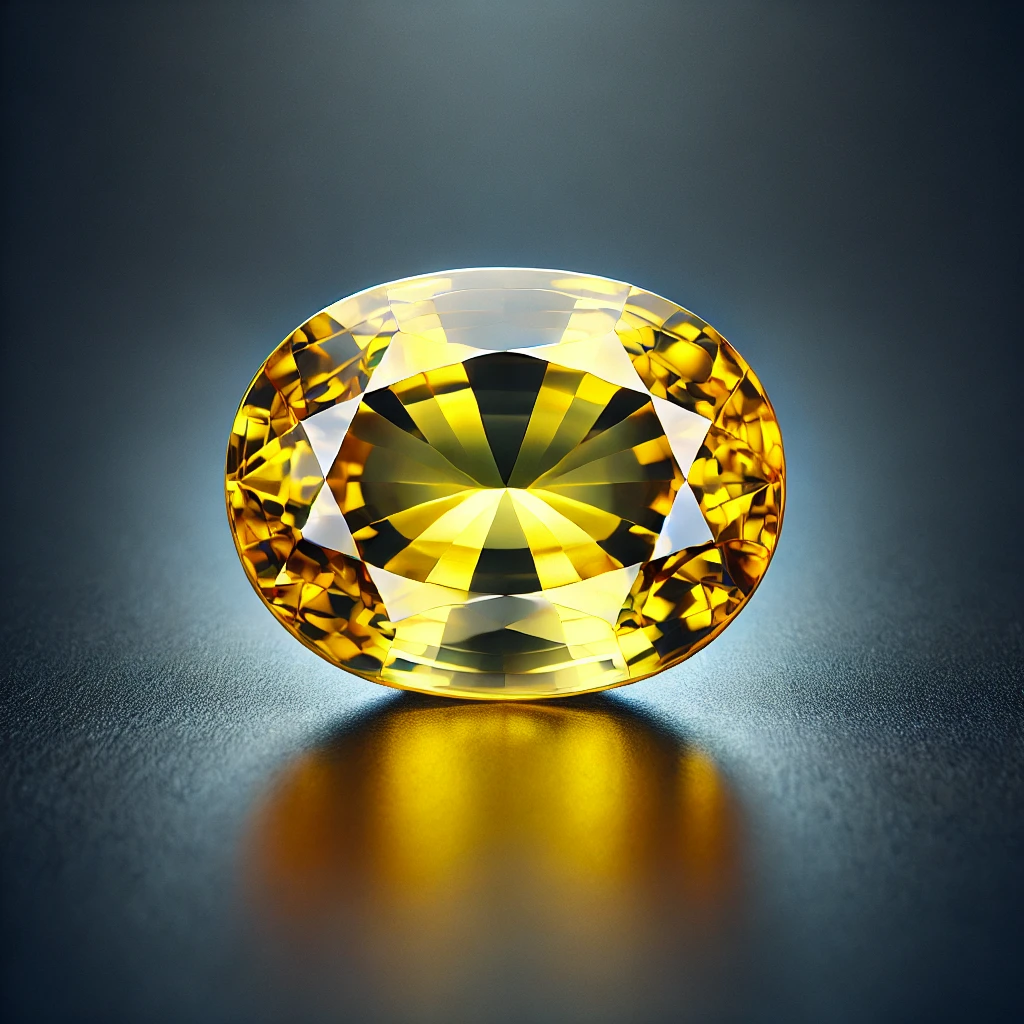
Yellow Sapphire, commonly known as Pukhraj, is a precious gemstone from the corundum family, admired for its golden-yellow hues and strong astrological significance. It is associated with Jupiter, the planet of wisdom and prosperity, making it a popular choice in both jewelry and Vedic astrology.
Key Factors Determining Yellow Sapphire Quality
1. Color – The Most Important Factor
- The finest Yellow Sapphires exhibit vivid golden-yellow or canary yellow hues.
- Avoid stones with brownish, greenish, or pale yellow tones, as they are less valuable.
- Saturation & Intensity matter—the deeper and more even the color, the higher the value.
2. Clarity – Inclusions Affect Price & Beauty
- Top-quality sapphires have minimal inclusions, enhancing transparency and brilliance.
- Common inclusions: Feathery silk-like fibers, fingerprints, or tiny mineral crystals.
- Eye-clean stones are rare and command premium prices.
3. Cut – Maximizing Beauty & Sparkle
A well-cut sapphire enhances brilliance and makes the color more vibrant. Common cuts include:
- Oval & Cushion Cut – Popular for rings and pendants, retaining maximum weight.
- Round Brilliant Cut – Enhances sparkle but results in higher gemstone wastage.
- Emerald Cut – Highlights clarity with a sleek, elegant step-cut.
- Fancy Cuts (Pear, Heart, Marquise) – Preferred for designer jewelry.
4. Carat Weight – Bigger Stones, Bigger Value
- Yellow Sapphires are available from under 1 carat to over 10 carats.
- Larger stones (3 carats and above) are rarer and significantly more expensive per carat.
Top Mining Locations for Yellow Sapphire
1. Sri Lanka (Ceylon) – Best Quality
- Produces top-grade sapphires with bright golden-yellow hues.
- High transparency and minimal inclusions make Ceylon sapphires most sought after.
2. Thailand – Deep Golden Shades
- Thai sapphires are known for rich, deep golden tones but may have slight inclusions.
- Many undergo heat treatments to enhance color.
3. Madagascar – High Clarity Stones
- Known for exceptional clarity and slightly greenish-yellow tones.
- Growing in popularity due to their brilliance and affordability.
4. Australia – Darker Yellow Variants
- Produces darker, brownish-yellow sapphires.
- Less expensive but still valued for their durability and hardness.
Treatments & Enhancements – What You Must Know
Many Yellow Sapphires undergo treatments to enhance color and clarity. The most common treatments include:
✅ Heat Treatment (Common & Acceptable) – Improves color and reduces inclusions without affecting durability.
❌ Diffusion Treatment (Less Valuable) – Adds artificial color through surface diffusion, making stones less desirable.
❌ Glass-Filled & Dyed Sapphires (Avoid These) – Inferior-quality stones that may crack or fade over time.
💡 Tip: Always ask for a certification from a reputable gem lab (GIA, IGI, GRS) to verify if a sapphire is natural or treated.
Pricing Guide – How Much Does Yellow Sapphire Cost?
Prices vary based on origin, color, clarity, and treatments. Below is a rough estimate:
🔹 Natural, untreated stones fetch the highest prices.
🔹 Heat-treated stones are more affordable but still valuable.
🔹 Lab-created or glass-filled sapphires are significantly cheaper and not investment-worthy.
Buying Tips – How to Choose the Best Yellow Sapphire
✔ Choose a certified gemstone – Always ask for a GIA, IGI, or GRS certificate to verify authenticity.
✔ Check the color carefully – Look for a vivid, pure golden-yellow hue with no green or brown undertones.
✔ Pick the right cut – A well-cut stone enhances brilliance; avoid overly deep or shallow cuts.
✔ Avoid heavily treated stones – Heat-treated sapphires are acceptable, but avoid diffusion-treated or dyed ones.
✔ Buy from a trusted seller – Reputable jewelers and online stores with good reviews offer better quality assurance.
for inquiry contact
Sri Lanka: +94740284059
India: +91 80099 53003
USA Call/SMS: +1 234 529 2473 generate alibaba product listing
Email: usa@thaitradezone.com
Website: www.thaitradezone.com